 Capuchin Crypt Tours
Home › Guides › Catacombs of Priscilla: Hours, Booking and the Capuchin Crypt Tours That Go There
Catacombs of Priscilla: Hours, Booking and the Capuchin Crypt Tours That Go There
The Catacombs of Priscilla are open Tuesday to Saturday 09:30-13:00 and 14:00-17:00 and Sunday 11:30-13:00 and 14:00-17:00, closed Monday, and booking is required for all visits. This guide covers the hours and closures, what you see underground, who is buried there, how to get there and the after-hours tours that pair Priscilla with the Capuchin Crypt from $55 per person. Every option sits side by side in the Capuchin Crypt tours catalogue.
Quick answer Hours, booking and the tours that combine the catacombs with the Capuchin Crypt
Yes, the Catacombs of Priscilla are open to the public: Tuesday to Saturday 09:30-13:00 and 14:00-17:00, Sunday 11:30-13:00 and 14:00-17:00, closed Monday and from 11 January to 1 February. Booking is required for all visits. The easiest way to see them together with the Capuchin Crypt is an after-hours tour with transport, from $55 per person.
Key takeaways
- Compare the two after-hours tours on the capuchin crypt tours homepage before you book.
- Check opening hours and closures in Can you visit the Catacombs of Priscilla?.
- See what a combined evening looks like in Which Capuchin Crypt tours also visit the Catacombs of Priscilla?.
- Read the rules in What is the dress code and what rules apply? before you go underground.
Can you visit the Catacombs of Priscilla?
Yes, the catacombs are open to the public on a guided-visit basis, with booking required for all visitors.
The site runs fixed guided visits, not free wandering. You join a timed slot with a guide and walk a set route through the tunnels.
Opening hours
The opening hours are Tuesday to Saturday 09:30-13:00 and 14:00-17:00, and Sunday 11:30-13:00 and 14:00-17:00. The site closes on Mondays, on 1 November, 8 December, 24-26 December, 1 and 6 January, from 11 January to 1 February, and on Easter Sunday.
Booking is required for all visits, including individuals. The online booking flow lets you pick a language, group type, date and time, and individual reservations and group bookings are handled separately. The entry fee appears in the booking flow, so check it there before you fix your budget.
| Day | Morning | Afternoon |
|---|---|---|
| Monday | Closed | Closed |
| Tuesday to Saturday | 09:30-13:00 | 14:00-17:00 |
| Sunday | 11:30-13:00 | 14:00-17:00 |
| 11 January to 1 February | Closed | Closed |
What the visit is like
A visit covers a set route on two levels of tunnels, more than 13 km of them in total, cut into tufa under the Via Salaria. The guide leads you past the three notable areas: the Greek Chapel, the cryptoporticus and the tombs.
The entrance sits inside the cloister of the monastery of the Benedictines of Priscilla, so you walk in through a working religious complex rather than a stand-alone museum gate.
If you are planning the same day around the Capuchin Crypt, note that the crypt near Piazza Barberini is a different site with its own ticket and hours. Its full comparison is on the capuchin crypt tours homepage.
| Site | Booking | Guide |
|---|---|---|
| Catacombs of Priscilla | Required for all visitors | Included guided visit |
| Capuchin Crypt | Tickets online or on site, booking not mandatory for individuals | Guided or audio guide options |
Source: Capuchin Crypt Museum.
Which Capuchin Crypt tours also visit the Catacombs of Priscilla?
Two after-hours tours pair the Capuchin Crypt with the Catacombs of Priscilla and include transport, at $55 and $124.45 per person.
If you want both underground sites in one outing, a combined tour with transport saves you the cross-town leg between them, and you see Priscilla after regular closing.
The two combined options
After Hours Crypts & Catacombs Express Guided Tour by City Wonders costs $55 per person, runs 2.5 hours, holds a 4.7 rating from 231 reviews and offers free cancellation up to 24 hours ahead. It starts at Piazza Barberini with the crypt and an audio guide, then drives to Priscilla.
Rome Catacombs After-Hours Tour with Capuchin Crypt & Transport by The Tour Guy costs $124.45 per person, runs 3 hours, holds a 4.6 rating from 107 reviews and offers the same cancellation window. It visits Priscilla first, then the crypt at closing time. When Priscilla is closed it switches to San Sebastiano, so check your date against the closures.
| Tour | Price | Duration | Rating | Reviews | Cancellation |
|---|---|---|---|---|---|
| After Hours Crypts & Catacombs Express Guided Tour | $55 | 2.5 hours | 4.7 | 231 | Free 24h |
| Rome Catacombs After-Hours Tour with Capuchin Crypt & Transport | $124.45 | 3 hours | 4.6 | 107 | Free 24h |
Visiting the two sites separately
You can also book them on your own. For the crypt alone, Capuchin Crypts Guided Tour with Audio Guide Option costs $22 per person and Capuchin Crypts Entry Ticket with Audio Guide costs $10.45 per person, both with free cancellation 24 hours ahead.
Splitting the day works well because Priscilla closes at 17:00 while the crypt's last entry is 17:30, so do the catacombs in the morning and the crypt in the afternoon. Book the Priscilla slot first, since booking is required there for all visitors.
Sources: Catacombs of Priscilla, Capuchin Crypt Museum.
Tours That Fit
Tours that cover the Catacombs of Priscilla and the Capuchin Crypt in one booking, plus the crypt on its own.
 from $55
After hours
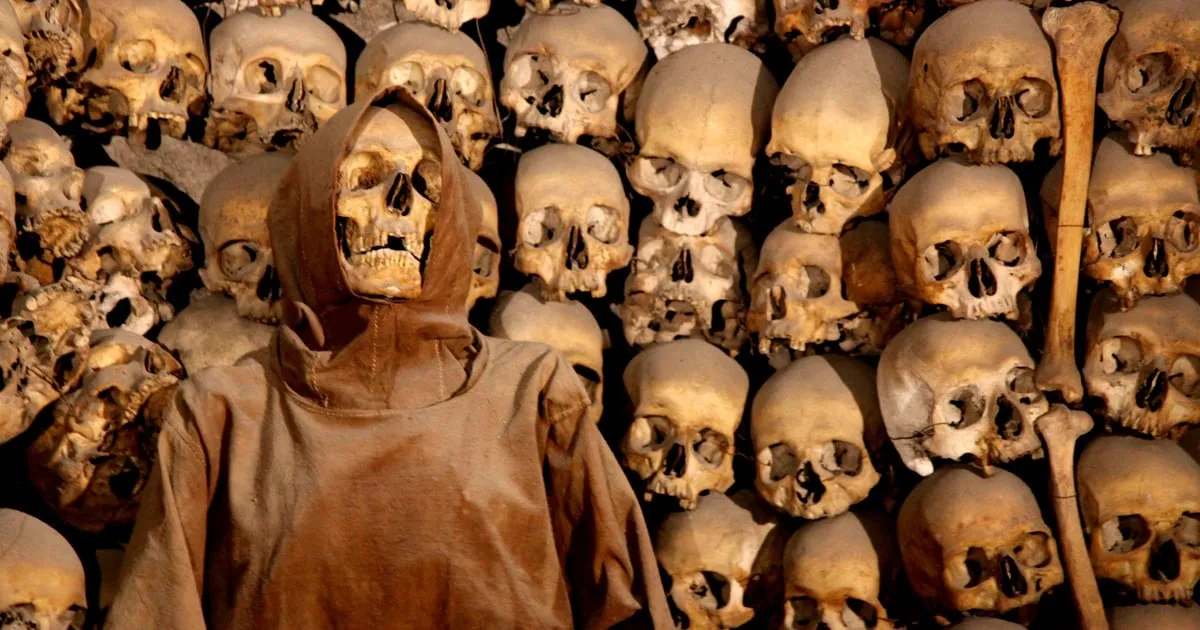
After Hours Crypts & Catacombs Express Guided Tour
After hours access to the Catacombs of Priscilla without daytime crowds, paired with the Capuchin Bone Chapel in one 2.5 hour coach tour.
Check Availability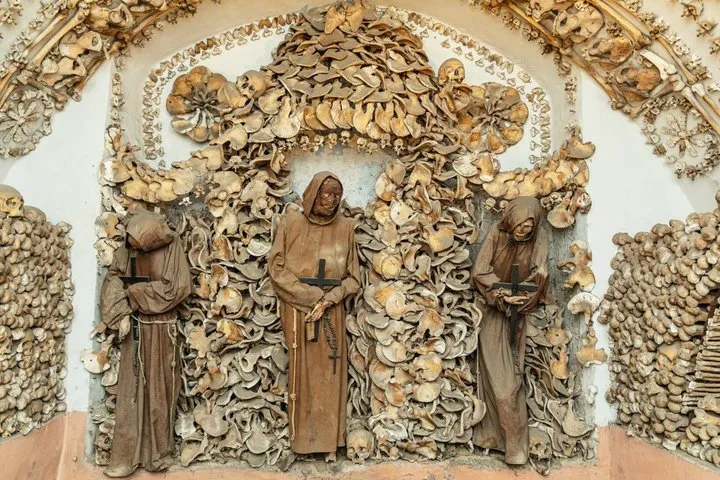 from $124.45
Rome Catacombs After-Hours Tour with Capuchin Crypt & Transport
Entry to the catacombs after normal hours and to the Capuchin Crypts at closing time, when crowds are gone.
Check Availability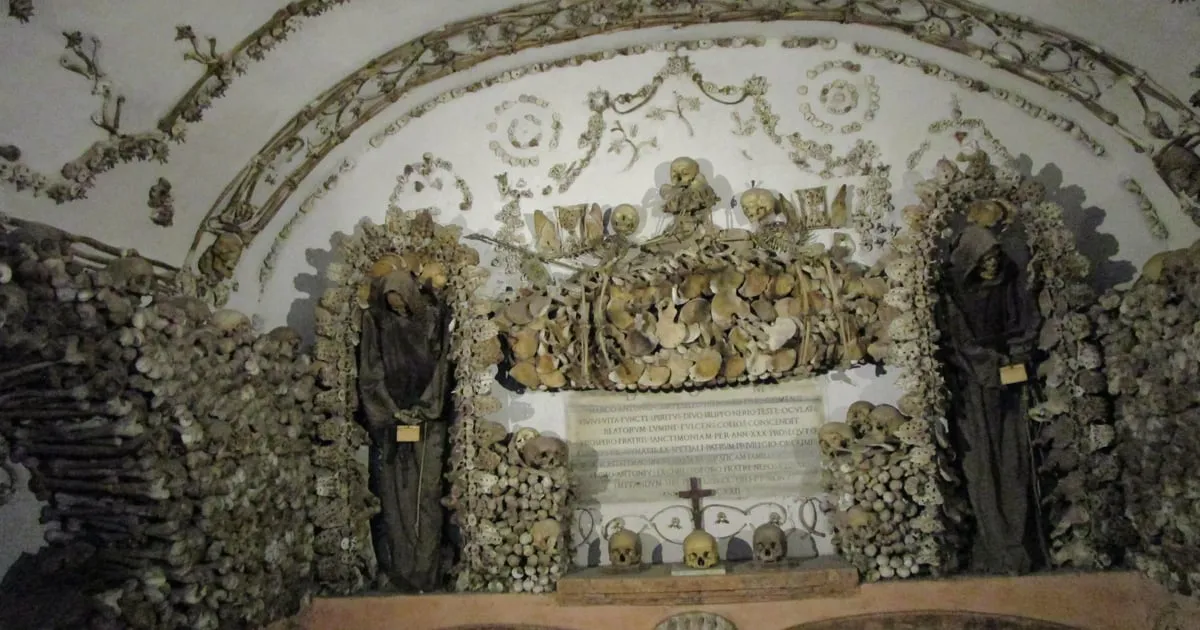 from $22
Editor's pick
Capuchin Crypts Guided Tour with Audio Guide Option
A short skip-the-line crypt visit with a choice of live guide or audio guide in 14 languages, capped at 10 people.
Check AvailabilityWhat were the Catacombs of Priscilla used for?
They were an underground burial network for thousands of Christians, dug from the late 2nd century through the 4th century.
Priscilla was never a dwelling or a refuge. It was a cemetery, carved floor by floor into the soft tufa under the Via Salaria.
A cemetery in the tufa
The galleries hold about 40 thousand burials across 13 kilometers of tunnels on two levels. Excavation ran between the end of the 2nd century and the 5th century.
The diggers partly reused older structures. A pozzolan quarry called the Arenarium and a hypogeum with tombs of the Acilii Glabrioni family were absorbed into the Christian cemetery. Burials continued from the late 2nd century through the 4th century.
The scale earned the site its nickname, Regina Catacumbarum, the queen of the catacombs.
| Feature | Detail |
|---|---|
| Tunnels | 13 km on two levels |
| Burials | About 40,000 |
| Excavated | Late 2nd to 5th century |
| Material | Tufa, partly reusing a pozzolan quarry |
From cemetery to pilgrimage site
A basilica was later built over the tomb of San Silvestro, who was elected Pope in 314. That basilica now lies in the basement of the monastery above the catacombs, and Holy Mass can be celebrated there for pilgrim groups on reservation.
This history is the frame the guide uses on your visit: you are walking a cemetery of the early Roman church, not a decorative cave.
Who is buried in the Catacombs of Priscilla?
Seven early popes and more than three hundred martyrs were buried there, including Pope Sylvester and the martyrs Felice and Filippo.
This density of papal and martyrs' tombs is why the site carries the title Queen of the Catacombs.
The named dead
Guidebooks state seven early popes and more than three hundred martyrs were buried in the tunnels. The named figures include Pope Sylvester and the martyrs Felice and Filippo.
The Depositio Martyrum, an early record of Roman martyrs, lists more names tied to the site: popes Marcellinus and Marcellus, the martyrs Felix and Philip, Pudenziana and Praxedes, Maurus and Simetrius, 360 anonymous martyrs and Pope Sylvester.
The ancient accounts and the modern signage do not always match on every name, so treat the guide's commentary as the version to follow on site.
| Name | Role |
|---|---|
| Pope Sylvester | Pope from 314, tomb basilica in the basement |
| Felice and Filippo | Martyrs |
| Marcellinus and Marcellus | Popes recorded in the Depositio Martyrum |
| 360 unnamed martyrs | Recorded in the Depositio Martyrum |
The unnamed dead
Most of the roughly 40 thousand burials are ordinary Christians of the early Roman community. Their loculi, the simple slot graves cut into the walls, line the galleries you walk through.
One grave stands out for its decoration rather than its occupant: the Cubiculum of the Velata holds three fresco portraits of a single unnamed woman, and she is known only by the veil in the paintings.
What art will you see in the Catacombs of Priscilla?
The highlights are the Cubiculum of the Velata, the Greek Chapel with its Fractio panis fresco and the oldest known depiction of the Virgin, dated 230-240.
Priscilla is as much an art site as a burial site. Three decorated rooms carry most of its reputation.
The Cubiculum of the Velata
The Velata's Cubicle holds frescoes dated to the second half of the 3rd century. The three portraits follow the life of a single unnamed woman, shown veiled, which gives the room its name.
The Greek Chapel and the cryptoporticus
The Greek Chapel opens onto the cryptoporticus. Its frescoes date to the time of emperor Gallienus, 253 to 268, and include the scene known as Fractio panis, the breaking of bread.
The cryptoporticus is an older structure absorbed into the catacomb, one of the reused elements alongside the Arenarium quarry.
The oldest image of the Virgin
A fresco dated 230 to 240 shows the Virgin and Child with the prophet Balaam. It is considered the oldest depiction of the Virgin, and the catacomb may hold the oldest known Marian paintings overall, from the early 3rd century.
The catacomb publishes no photography rule, so ask your guide before raising a camera or phone.
Where are the Catacombs of Priscilla and how do you get there?
The entrance is on the Via Salaria at number 430, through the cloister of the Benedictine monastery, beside the park of Villa Ada Savoia.
The catacombs sit in the north-east of central Rome, and the entrance is easy to miss because it hides behind monastery walls.
Finding the entrance
You enter through the cloister of the monastery of the Benedictines of Priscilla on the Via Salaria. The address is Via Salaria 430. The tunnels partly run under the neighbouring park of Villa Ada Savoia.
Give yourself a few extra minutes to find the gate on a first visit. The street is busy and the monastery wall hides the complex from the road.
| Detail | Info |
|---|---|
| Address | Via Salaria 430 |
| Entrance | Cloister of the Benedictine monastery |
| Neighbouring park | Villa Ada Savoia |
Getting there on a combined day
Priscilla publishes no metro or bus directions, so plan the public transport leg in a routing app before you leave.
The Capuchin Crypt sits across the centre near Piazza Barberini, which is why the after-hours tours include transport. If you visit independently, build in travel time between the two sites and book the Priscilla slot first, since booking is required there and the site closes at 17:00.
What is the dress code and what rules apply?
The site is inside a religious complex, so dress modestly, and note that all visits require a booking and follow a fixed guided route.
The practical rules are few but firm, and the temperature underground surprises many first-time visitors.
Dress and conduct
The entrance sits inside a working Benedictine monastery, and Mass can be celebrated in the basement basilica for pilgrim groups, so treat the complex as a church space. Both after-hours tours that visit Priscilla require knees and shoulders covered for men and women.
The catacomb publishes no dress code, photography rule or bag rule of its own. Ask at the entrance and follow the guide's instructions once underground.
| Rule | Status |
|---|---|
| Booking | Required for all visits |
| Visit format | Timed guided visits only |
| Dress code | Knees and shoulders covered on the tours |
| Photography | No published rule, ask your guide |
Comfort underground
The tunnels are cool underground, so bring a layer even on a hot Rome day, as The Tour Guy advises for its evening visit. Wear shoes with grip, since the route involves stairs and old floors.
The visit runs on a set route with a guide, so there is no lingering or doubling back. Eat and use the facilities before your slot.
Source: Catacombs of Priscilla.
When were the Catacombs of Priscilla built?
The tunnels were excavated between the end of the 2nd century and the 5th century, with burials from the late 2nd century through the 4th century.
The site grew over centuries rather than being dug in one campaign.
The timeline
Excavation began in the late 2nd century and continued into the 5th century. The earliest frescoes in the decorated rooms support that span: the Virgin and Child image is dated 230 to 240, and the Velata frescoes belong to the second half of the 3rd century.
The oldest structure on the route predates the Christian cemetery. The hypogeum with tombs of the Acilii Glabrioni and the Arenarium pozzolan quarry were already in the ground when the burial galleries spread around them.
The basilica over the tomb of San Silvestro, Pope from 314, marks the later phase, when the cemetery became a place of pilgrimage.
| Period | Event |
|---|---|
| Pre-2nd century | Arenarium quarry and Acilii Glabrioni hypogeum |
| 230-240 | Oldest depiction of the Virgin painted |
| Second half of 3rd century | Velata frescoes painted |
| 253-268 | Greek Chapel frescoes, reign of Gallienus |
| From 314 | Cult of Pope Sylvester, later basilica over his tomb |
| 5th century | Excavation ends |
Why the dates matter on your visit
The guide uses this timeline to explain what you see, from the reused quarry to the painted rooms of the 3rd century and the later cult of Pope Sylvester.
If art history is your reason for coming, say so at booking. The booking flow lets you pick your visit language and group type.
What is the best catacomb to visit in Rome?
For art, the Catacombs of Priscilla are hard to beat, since they hold the oldest known image of the Virgin and the Velata frescoes.
Only 7 of more than 60 Roman catacombs are open to the public, so the choice is narrower than it looks. Priscilla earns its Queen of the Catacombs nickname on art history grounds.
Why Priscilla comes first for many visitors
Priscilla combines three things in one site: the Velata's Cubicle frescoes from the second half of the 3rd century, the Greek Chapel with the Fractio panis scene from the reign of Gallienus, and the Virgin and Child fresco dated 230 to 240.
Add the papal burials, seven popes and more than three hundred martyrs by guidebook counts, and the site justifies its nickname Regina Catacumbarum.
Priscilla publishes no ticket price outside its booking flow, so compare entry fees there before deciding.
| Reason to choose Priscilla | Detail |
|---|---|
| Art | Velata frescoes, Fractio panis, oldest Virgin image |
| Burials | Seven popes and over three hundred martyrs |
| Scale | 13 km of tunnels, about 40,000 burials |
| Setting | Benedictine monastery on the Via Salaria |
Pairing it with the Capuchin Crypt
If your Rome trip is built around underground and bone sites, Priscilla and the Capuchin Crypt make a natural pair. The crypt, decorated by Capuchin friars in the 18th and 19th centuries, holds the remains of about 3,700 people, mostly Capuchin friars.
The two sites differ in character. The catacombs are an early Christian cemetery with painted rooms. The crypt is a baroque bone chapel in the city centre. An after-hours tour, from $55 per person, links both in one 2.5 to 3 hour outing with transport.
| Site | Type | Dates | Remains |
|---|---|---|---|
| Catacombs of Priscilla | Early Christian cemetery with frescoes | Late 2nd to 5th century | About 40,000 burials |
| Capuchin Crypt | Baroque bone chapel | Decoration 18th-19th century | About 3,700 people, mostly friars |
Source: Capuchin Crypt Museum.
Frequently Asked Questions
What is the Catacombs of Priscilla official website?
The official site is catacombepriscilla.com, where you also book. The booking flow lets you choose language, group type, date and time, and individual and group reservations are handled separately.
Are Catacombs of Priscilla reviews good?
The two after-hours tours that include Priscilla rate well: 4.7 from 231 reviews for the City Wonders Express tour and 4.6 from 107 reviews for The Tour Guy.
Why do Catacombs of Priscilla appear in AP Art History?
Because of the frescoes. The Cubiculum of the Velata, its three portraits of one unnamed woman, and the Virgin and Child image dated 230-240, considered the oldest depiction of the Virgin, are standard exam images.
Where is the Good Shepherd image in the Catacombs of Priscilla?
The catacomb does not publish the Good Shepherd's position on its route. Ask your guide on the visit, since the route covers the Greek Chapel, the cryptoporticus and the tombs.
Can you take photos in the Catacombs of Priscilla?
The catacomb publishes no photography rule, and The Tour Guy's after-hours tour says photography is not allowed. Ask your guide before your visit starts.
Do children need a ticket at the Catacombs of Priscilla?
Priscilla's child policy shows in its booking flow. For the Capuchin Crypt, children up to 6 inclusive enter free and need no booking.
How long does a visit to the Catacombs of Priscilla take?
Priscilla publishes no fixed visit length for the catacombs alone. The after-hours tours that pair them with the Capuchin Crypt run 2.5 to 3 hours.
More Guides
- Catacombs of San Sebastiano: Hours, Tickets and Capuchin Crypt Combos
Catacombs of San Sebastiano 2027: open Tuesday to Sunday 09:15-17:15, guided visits only. Pair it with the Capuchin Crypt. Plan your day.
- Rome Catacombs Tours with the Capuchin Crypt
Rome catacombs tours from $44 with transfers, 2 to 4 hours, most with the Capuchin Crypt. See which catacomb each one visits in 2027.
- Capuchin Crypt After-Hours Tours with the Catacombs
After-hours Capuchin Crypt and Priscilla catacombs tours for 2027: late entry, transport between sites, groups of 20 to 25. Compare and book.